Notes
Quick takes on AI and robotics news.
See how these notes are created- Closing AI Frontiers shows raw scale replacing research
Microsoft has dissolved its fifty-person AI Frontiers research group after absorbing the team into Microsoft AI, prompting lead John Langford to exit alongside several founding researchers.
- Live training streams bring public debugging to open RL
Hugging Face has started letting researchers stream live training runs directly on the platform, kicking off with reinforcement learning experiments on models from Liquid AI and Twil-9B.
-
 ToyBlocks brings controlled baselines to robot learning
The debate over whether vision-language-action models generalize or merely memorize their demonstration data usually stalls because physical robot setups introduce too many uncontrolled variables.
- Voice agent pacing needs more than silence timers
Anyone trying to talk to a voice agent usually runs into the same friction: the system cuts in while you pause to think, or waits an awkward second too long after you finish.
-
 Research acceleration runs into physical compute limits
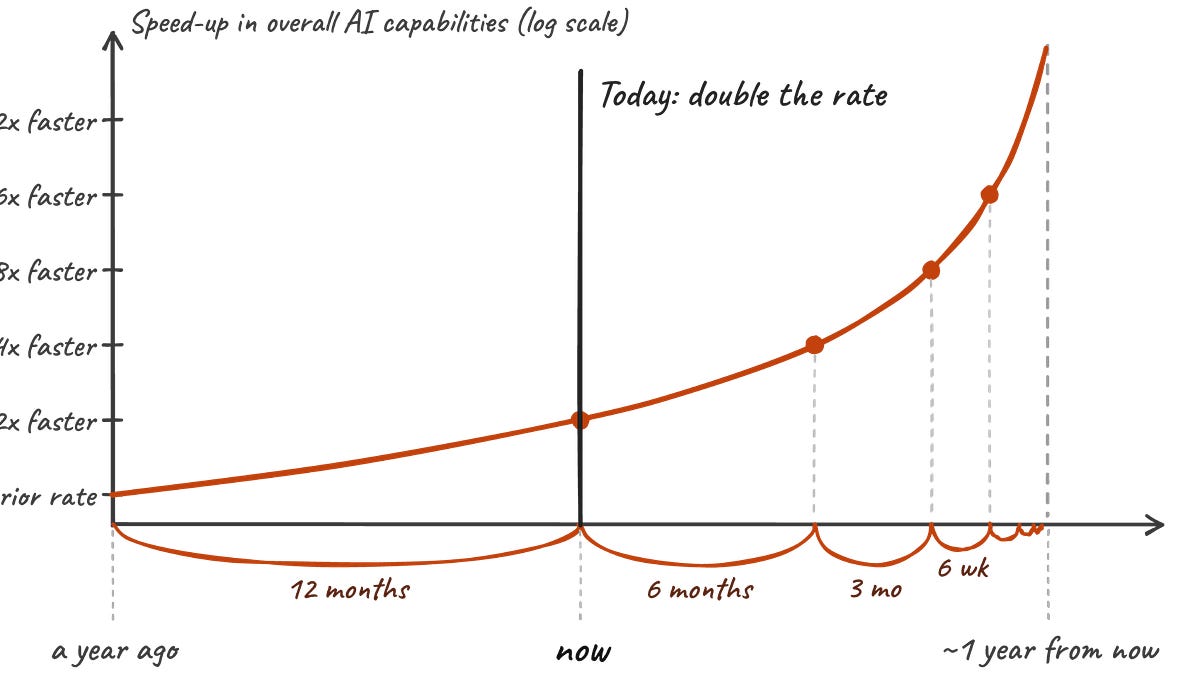
In METR's evaluation of Anthropic's research velocity, overall capabilities progress doubled between October 2025 and October 2026, crossing the threshold the lab defined for AI-assisted acceleration.
- RoboDojo brings bimanual tasks to Isaac Lab
Bimanual manipulation remains one of the hardest problems in robotics because contact physics compounds quickly when two arms interact with the same object.
- Gating GPT-6 Cyber buys time but shifts the risk
Finding a security flaw in system code requires the exact same reasoning as writing an exploit for it.
-
 Cosmos 3 splits physics simulation from rendering
NVIDIA is splitting interactive world simulation into two distinct approaches with four new 16B parameter Cosmos 3 open checkpoints.
-
 Drone delivery hubs hit an acoustic limit
Concentrating commercial drone delivery into regional launch pads solves logistics routing, but it creates an acoustic problem for neighboring communities.
-
 Dense 65B models challenge MoE on agentic coding
Ricursive Intelligence released Ripple-65B Preview, reporting a top score of 80.52 on TerminalBench 2.1 for US open-weight models.
- Real robot evaluations need open failure logs
Testing physical robot policies on actual hardware usually hits an economic wall. Running physical trials across varied environments demands fleets of machines and constant manual resetting.
-
 ISO 21423 opens the door for multi-vendor robot fleets
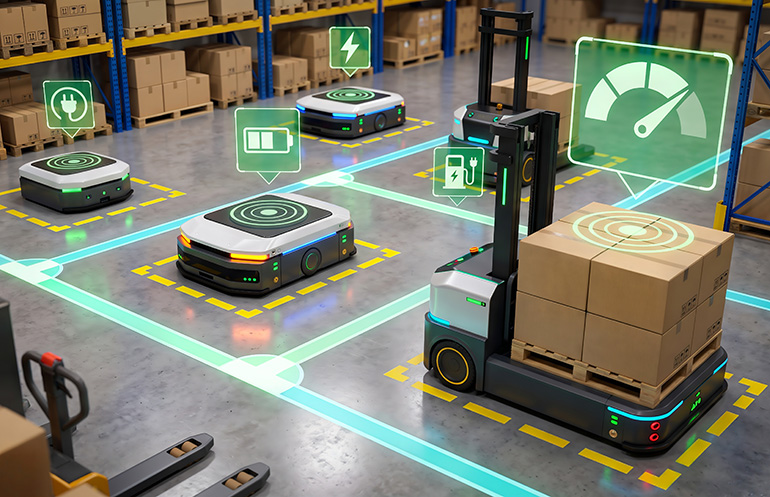
Running mobile robots from different manufacturers on the same facility floor usually meant carving the warehouse into rigid zones or paying an integrator to stitch proprietary fleet software together.
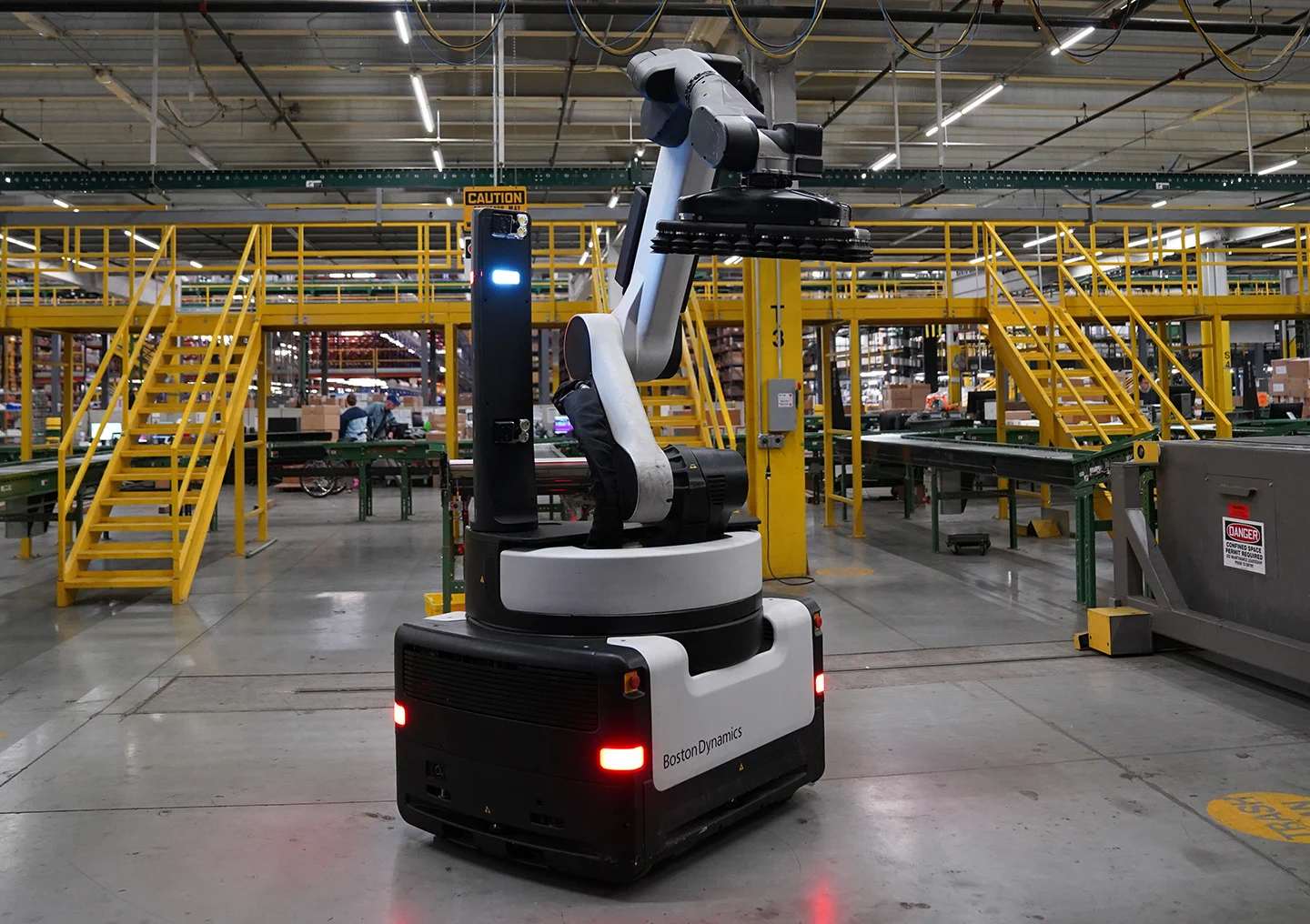
- Boston Dynamics focuses Stretch Gen 2 on dock uptime
A robot unloading freight inside a hot shipping container matters very little if a jammed actuator halts the entire receiving dock.
- Human control over AI is more than an engineering problem
In a post on X, Sam Altman argued that humans must never cede control to superintelligence, stating that OpenAI opposes any future where people only perform tasks artificial systems decide to reward.
- Mistral tests closed-loop coding on orbital tracking
Mistral reports that its Mistral Large 4 model built Orbital Trace, a real-time 3D tracker for roughly 19,000 satellites and debris fragments, by generating the application, testing it as an end user, and optimizing performance to pass verification.
- AI anxiety reveals deeper problems with how we measure value
In a guest essay on Terence Tao's blog, Karthik C.
- Measuring real AI adoption needs stable baselines
Tracking enterprise AI adoption over time requires consistent questions asked to the same demographic cohorts. When Simon Willison revisited the long-running U.S.
-
 Heavy equipment retrofits set to outpace custom hardware
The Robot Report reports that Bedrock Robotics has raised $600 million to scale autonomous retrofit kits for excavators and heavy earthmoving machinery.
-
 Warp Sciences bets robotics can onshore drug discovery
Designing candidate molecules on a cluster is fast, but confirming that they actually work still depends on manual chemistry at the bench.
- HackerTube inverts modern recommendation mechanics
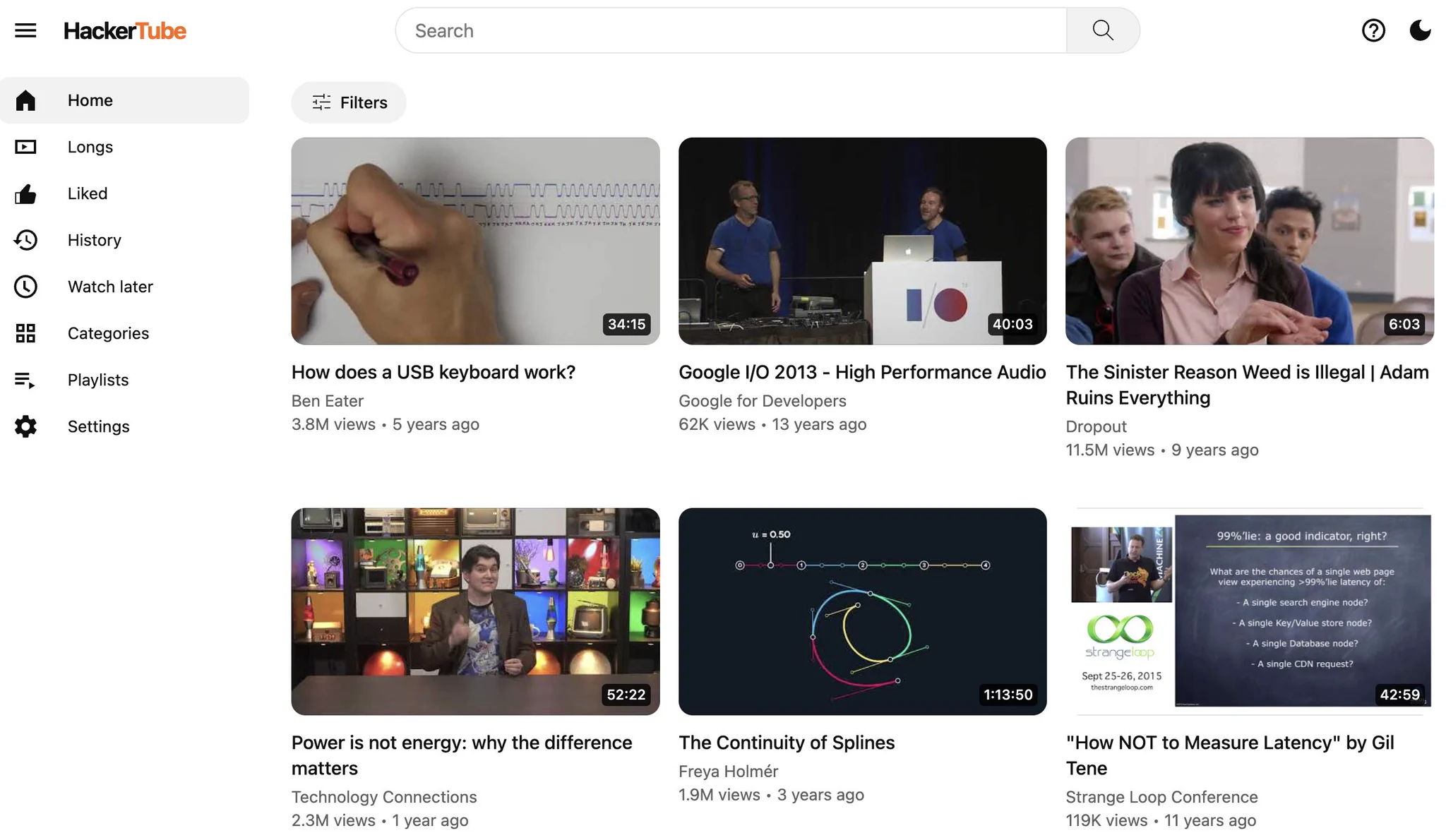
In a weekend project called HackerTube, Andrej Karpathy parsed 43 million Hacker News comments spanning twenty years down to 6,454 recurring video recommendations, building and deploying the entire service in about two hours with Claude Opus 5.5.