Research acceleration runs into physical compute limits
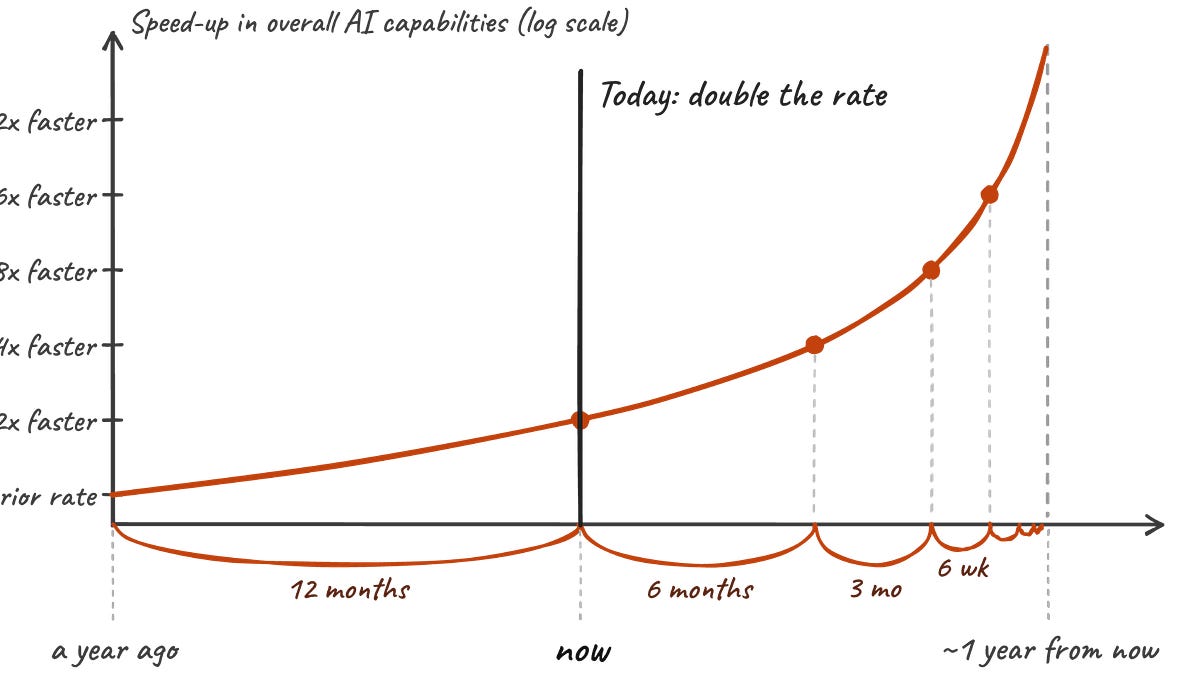
In METR's evaluation of Anthropic's research velocity, overall capabilities progress doubled between October 2025 and October 2026, crossing the threshold the lab defined for AI-assisted acceleration. That measurement relies on an internal version of the Epoch Capabilities Index, alongside informal staff reports claiming a twelve-fold uplift in researcher productivity from internal tooling. The immediate reaction across parts of the research community is to extrapolate that rate into near-term superintelligence, on the premise that models automating model design will quickly eliminate the human speed limit.
That extrapolation assumes algorithmic progress is primarily constrained by how fast engineers write code and prepare runs. In practice, finding architectural improvements quickly collides with physical limits. An engineering team moving several times faster can write scripts, generate test configurations, and debug failures in hours instead of days, but validating those ideas still requires cluster time, power, and clean data. Accelerating the labor side does not eliminate experimental latency; it concentrates pressure onto hardware availability and verification pipelines.
The measurement itself also warrants caution. METR noted that the majority of the evidence it found most informative was redacted in the public report. A doubling of progress on an internal capabilities index shows that developer tooling is delivering practical gains to the teams building it, but that is a different claim than frictionless recursive self-improvement. What I want to see before buying into a runaway feedback loop is whether faster iteration produces novel architectures once early optimizations are exhausted, or if it simply burns through compute budgets at a quicker pace.