Boston Dynamics focuses Stretch Gen 2 on dock uptime
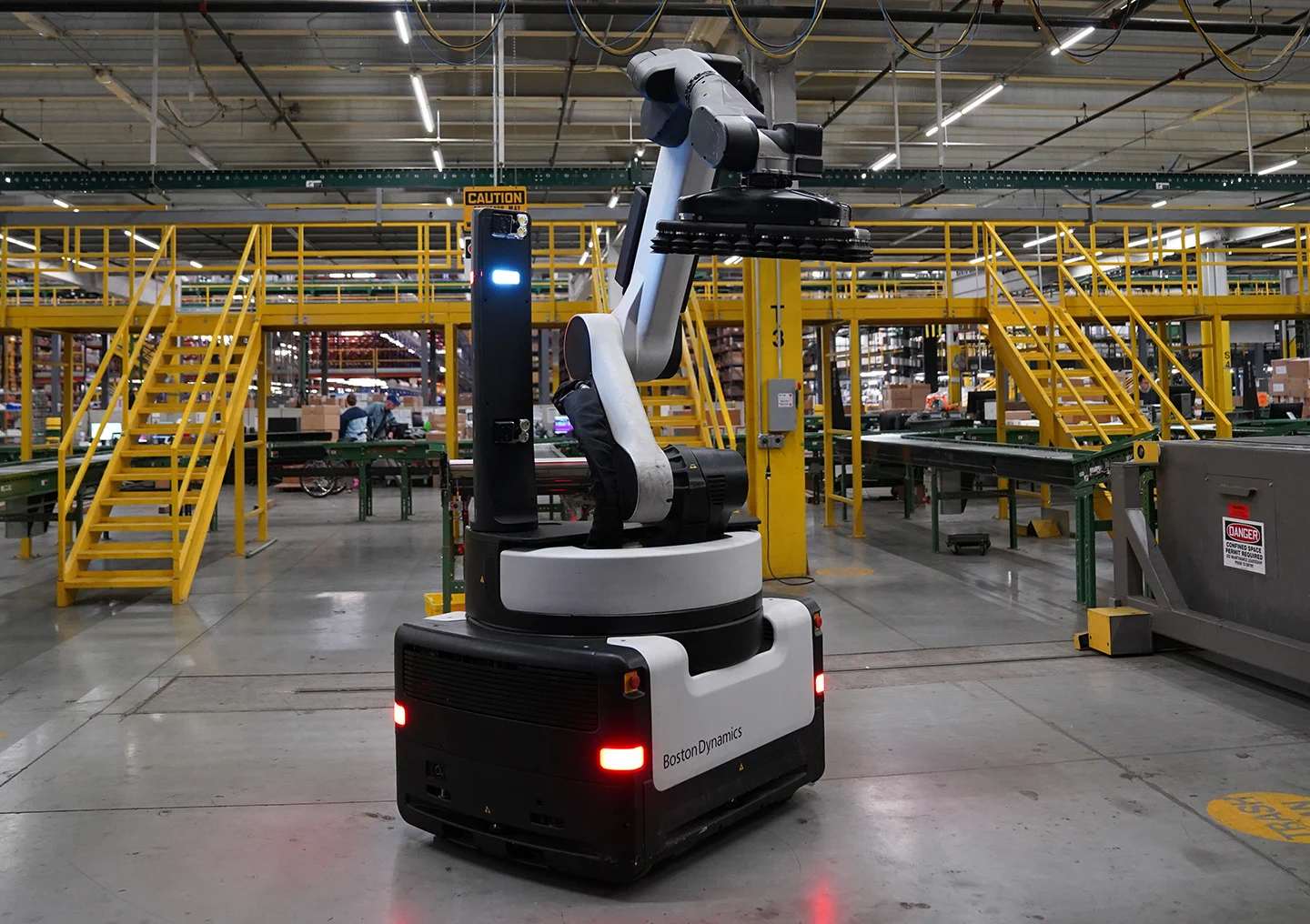
A robot unloading freight inside a hot shipping container matters very little if a jammed actuator halts the entire receiving dock. Boston Dynamics introduced Stretch Gen 2 with a stated focus on uptime and repairability over raw throughput. Brian Donnelly, who leads logistics robotics at the company, noted that development centered on what took early units offline in production: physical wear and service complexity.
Trailer unloading presents difficult operating conditions. Cartons shift in transit, stacks collapse, and trailers vary in floor grade and temperature. When an autonomous arm faults deep inside a container, clearing the failure often requires a human worker to squeeze past the mobile base to reset the system. If servicing a worn suction cup or a damaged joint takes hours of specialized maintenance, the labor savings on the manifest disappear.
This pivot toward serviceability marks a practical transition for mobile manipulation. Computer vision models can already identify and guide grasps on cardboard boxes reliably. One of the stubborn barriers to enterprise adoption remains mechanical reliability: making components simple enough to inspect and swap on site so that routine hardware fatigue does not back up distribution operations.