Warp Sciences bets robotics can onshore drug discovery
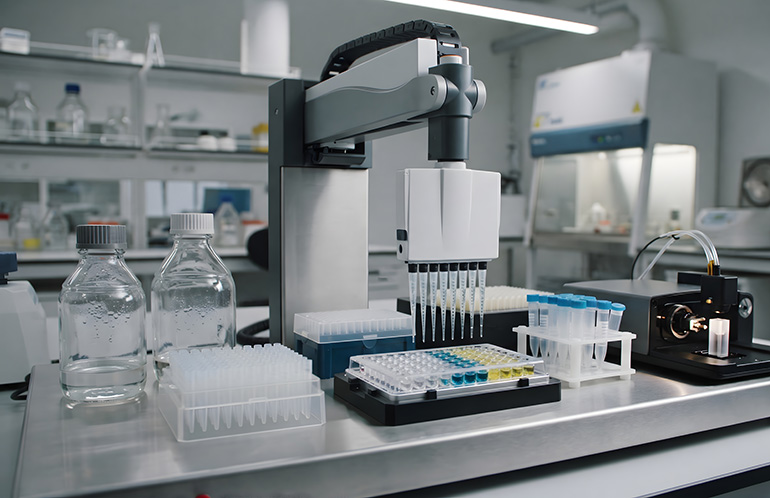
Designing candidate molecules on a cluster is fast, but confirming that they actually work still depends on manual chemistry at the bench. That gap between digital prediction and physical validation is the target for Warp Sciences, which launched with $215 million in funding to build an automated chemistry contract research organization in California. Founded by former engineering leads from OpenAI and Meta alongside medicinal chemists, the company plans to use robotic workcells for lead optimization analog synthesis, making molecular variations to test against targets and feeding the resulting physical data back into its models.
The economic push is regulatory as much as technical. Following the BIOSECURE Act, American biotech teams that previously relied on overseas research partners face pressure to bring compound synthesis home, where labor costs are higher. Domestic automated labs promise to absorb that difference, but wet-lab robotics has historically struggled with task variance. Handling varied viscosities, sensitive reagents, and unpredictable reaction yields demands far more mechanical flexibility than standard pick-and-place automation. If a synthesis fails or a vessel fouls, human intervention quickly erodes the margin.
Treating experimental chemistry as a closed data generation loop is the right direction for scientific AI. Still, the primary constraint on discovery is rarely the model's ability to propose candidate structures. The hurdle for Warp will be whether its hardware can deliver reliable multi-step synthesis at a unit cost that competes with manual overseas benches.