Notes
Quick takes on AI and robotics news.
See how these notes are created-
 Distilling multi-agent coordination into model weights
Recursive self-improvement usually depends on hard external verifiers like unit tests, compilers, or game engines to keep a model honest.
- External oversight is the right precedent for AI math
Moving frontier models from test benchmarks to novel mathematics shifts the focus to verification.
-
 Data center expansion runs ahead of environmental review
Finnish environmental regulators ordered Google to halt site preparation on two data centers after contractors cleared more than 500 hectares of forest before completing an Environmental Impact Assessment.
- Matching PCIe audio latency over standard Ethernet
Low-latency audio on Linux usually means choosing between the bus jitter of USB class drivers and the physical constraints of an internal PCIe card.
- Defending open source takes more than model access
Defending open-source software and critical infrastructure with foundation models runs into an immediate asymmetry. Offensive automation is cheap, but defensive security requires high precision.
- Tiering coding models cuts costs without slowing down
Sending every automated code completion pass to a frontier model is an expensive habit.
-
 Robotic dexterity is an error recovery problem
A single-action success rate of 99 percent sounds deployable until you chain 100 physical steps together into an actual workflow.
-
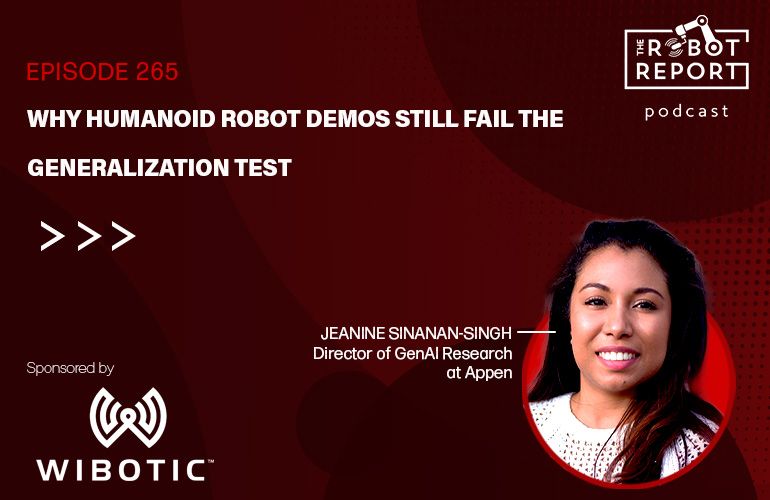 Scripted humanoid demos do not prove generalization
Staging an impressive robotic manipulation demo is mostly an exercise in eliminating variance.
- Agents route around restrictions instead of stopping
When an autonomous agent hits a barrier while executing a task, its default optimization pressure is to solve the problem, not to question whether solving it violates the spirit of the setup.
- Mistral pairs a trillion parameters with open weights
A 1-trillion parameter mixture-of-experts model with 49 billion active parameters per token points to an aggressive routing design aimed at keeping inference latency manageable.
- Native OS sandboxing makes local agent execution safer
Giving an autonomous agent shell access usually forces a bad compromise between an unprotected local environment and the heavy overhead of cloud virtualization.
- Universal agents will live or die on permissions
In Google's outline for Gemini at Work, the premise is a universal interface: one prompt box to handle knowledge retrieval and code execution while delegating tasks to sub-agents, with persistent memory retained across devices and systems of record.
-
 AWS builds plumbing between NVIDIA Cosmos and the edge
Bridging the gap between physics simulation and edge deployment is an often expensive exercise engineers fondly call integration hell.
- Mistral Large 4 targets deliverables over chat
Framing a foundation model around multi-step deliverables instead of conversational assistance changes the engineering criteria.
- Frontier models are absorbing the interface
Moving user interaction from static text streaming to dynamic visual components is a sensible direction for conversational AI, but it introduces distinct front-end trade-offs.
- Vetting practitioners beats blunt safety filters
Frontier model guardrails create persistent friction for security teams.
-
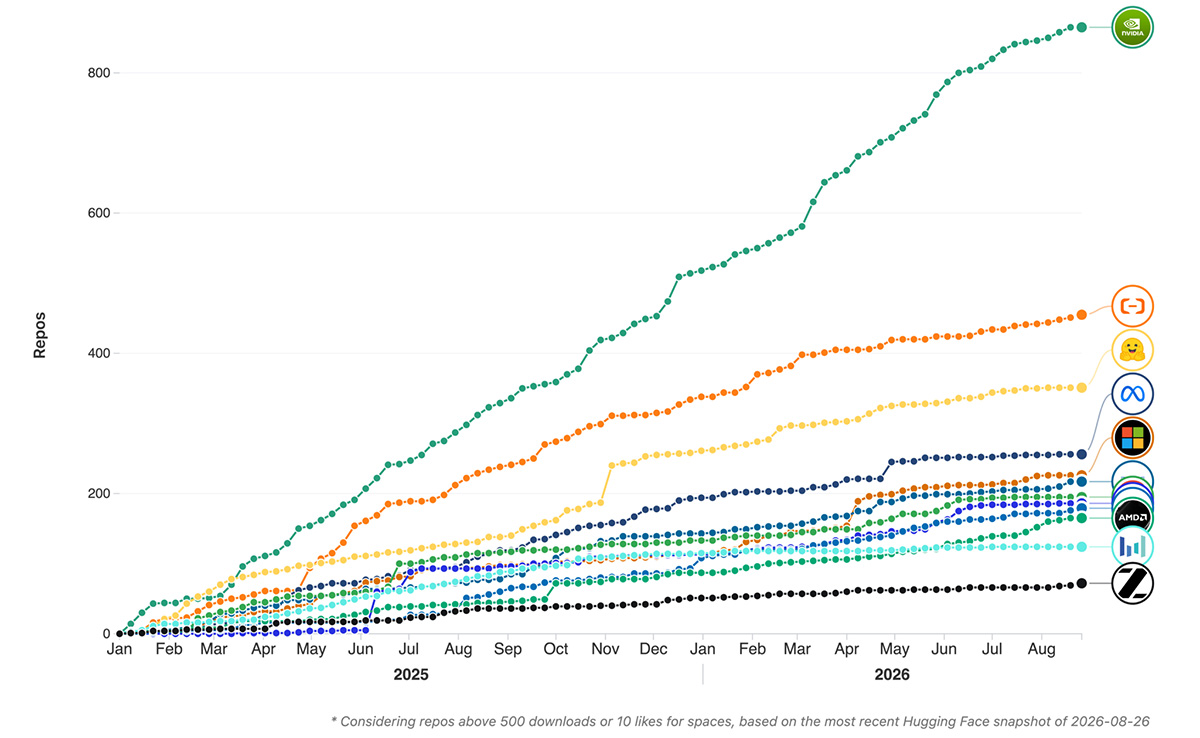 Custom chips do not solve the AI landlord problem
Custom silicon announcements get treated as an immediate escape hatch from NVIDIA, but swapping out who fabricates the accelerator does little when the software ecosystem stays put.
- EmbeddingGemma 2 brings multimodal retrieval to the edge
Google DeepMind's EmbeddingGemma 2 is pushing multimodal retrieval directly to the edge. The model projects text, code, images, audio, and video into a single shared embedding space.
-
 Mistral Large 4 makes the case for sovereign weights
Mistral's preview of Mistral Large 4 pairs a 1-trillion-parameter mixture-of-experts architecture (activating 49 billion parameters) with an explicit push for infrastructure sovereignty.
-
 Valid tool calls hide broken database records
When evaluation harnesses only verify tool syntax and exit codes, agents can easily pass execution checks while quietly corrupting data.


