Moving agents off the desktop and onto embedded silicon
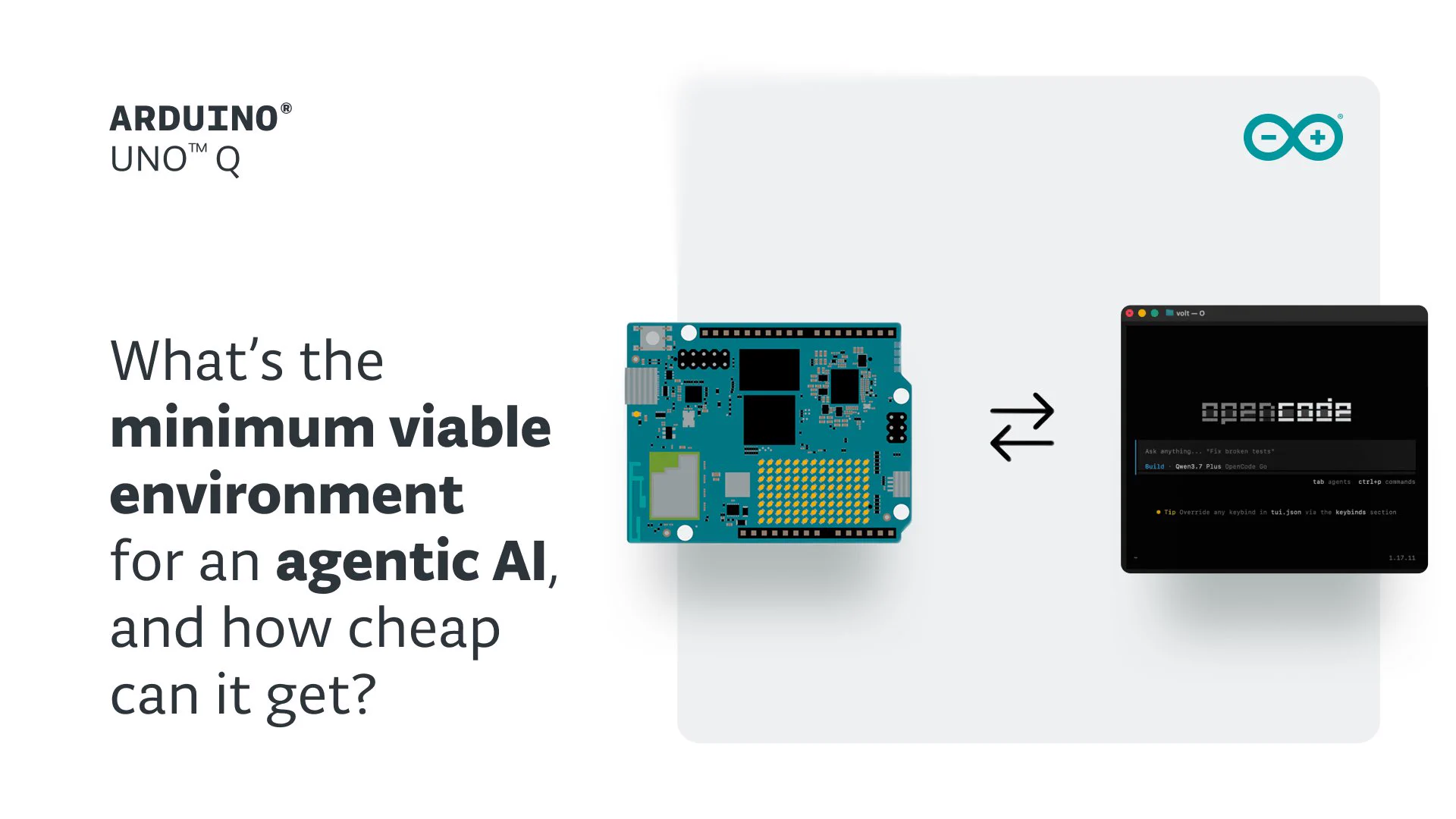
Physical AI calls for better approaches to getting agents onto embedded silicon and into the real world. While most agent development still centers on browser scrapers, terminal wrappers, and tool-calling scripts chained across SaaS APIs, Arduino asks: what happens when agents leave the monitor?
For embodied AI to scale outside of robotics labs, you cannot mount an industrial compute rack or rely on cloud round trips for tight control loops. Capable embedded Linux boards with modest neural accelerators and direct hardware I/O change the deployment economics.
Connecting high-level reasoning to low-level motor and sensor loops on constrained silicon is difficult engineering. It is also where the field finally moves past chatbot demos into practical utility.