Designing Robot Hands for Sim-to-Real RL
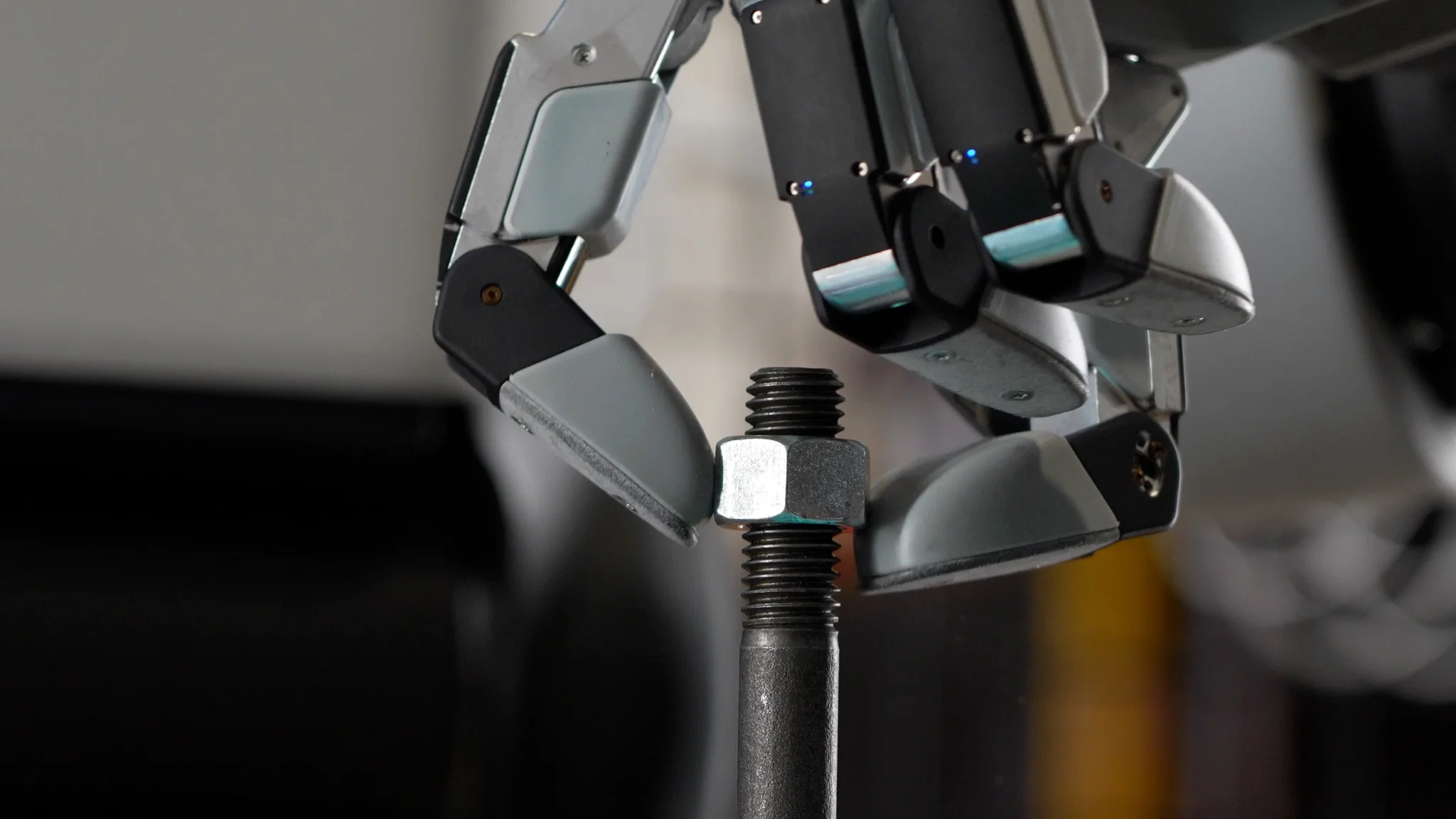
Dexterous manipulation has long been one of the many bottlenecks keeping humanoid robots locked inside controlled demos. Boston Dynamics unveiled new 13-degree-of-freedom hands for Atlas, but the critical engineering detail is not just the articulation count. It is the architectural pairing: direct actuation built specifically for high-fidelity simulation and sim-to-real reinforcement learning.
For years, dexterous hands occupied two frustrating extremes: bulletproof parallel grippers that could not manipulate delicate geometry, or research hands laced with complex cable tendons that snapped constantly. Tendon-driven setups are a nightmare to model in physics engines because non-linear friction and hysteresis degrade sim-to-real transfer. Direct actuation drastically cleans up the dynamics, allowing policies trained across millions of synthetic simulation hours to actually survive contact with reality.
This highlights how deeply modern robotics philosophy has shifted. Atlas was originally an icon of classical trajectory optimization and high-frequency hydraulic controls. Designing actuators from the ground up to accommodate RL training loops proves that hardware and learning pipelines are finally being co-designed. The physical robot is being shaped around the model, not the other way around.