Runway bets on video pretraining and open weights for robotics
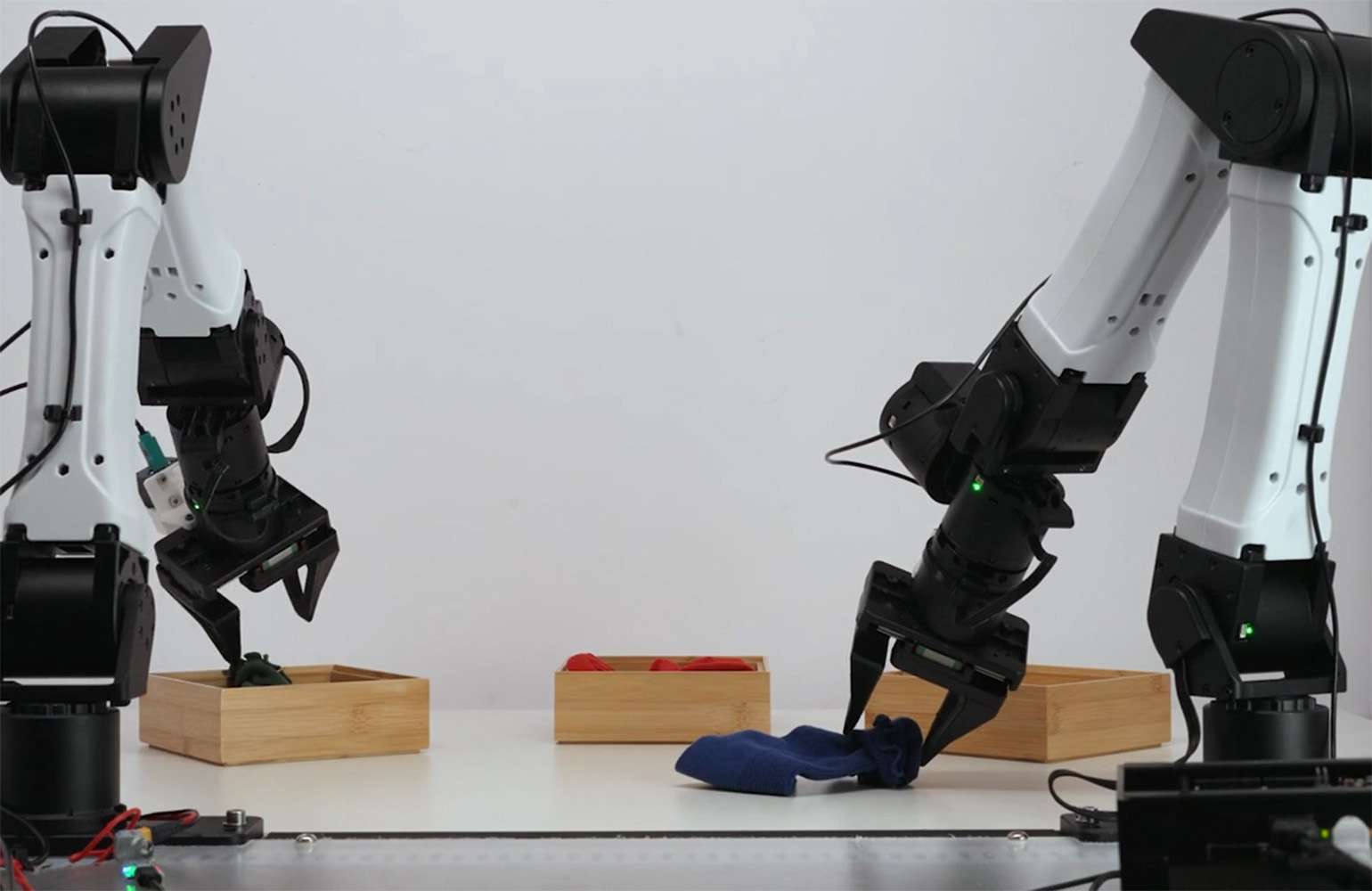
Gathering thousands of hours of physical robot demonstrations remains one of the priciest bottlenecks in robotics. Runway is tackling that data wall by releasing Praxis-1, an open-weight model that treats video prediction as the foundation for physical action. The system predicts upcoming video frames and joint commands together, carrying what it learned from broad video into the physical setup before fine-tuning on actual hardware. Runway argues that web video can substitute for expensive robot telemetry during pretraining, giving the model an early grasp of how objects move and how tasks unfold.
That shared pretraining shows up in how the policy transfers across mechanical designs. Runway reports that partners adapted the base weights to three distinct setups: a legged humanoid from Noble Machines, an industrial arm from Standard Bots, and a dual-arm packing station from Ultra. On NVIDIA's RoboLab-120 benchmark, the model scored a 46.2 percent success rate over 1,200 episodes, finishing ahead of open alternatives like Cosmos 3 Nano. In field testing with Noble Machines, Runway reports the policy picked up a warehouse plank-handling routine after thirty minutes of examples, clearing an unorganized pile six times out of ten.
Shipping the weights and fine-tuning recipes under an Apache 2.0 license matters more than the benchmark ranking. Hardware teams building specialized actuators usually face a hard trade-off between locked cloud APIs and training small policies from scratch. Open weights with LeRobot and vLLM support give developers a practical starting point they can adapt on embedded chips like Jetson Thor without handing telemetry to an outside vendor. Whether diffusion-based world action models can hold up when unexpected contact physics break the visual prediction remains to be seen, but running real workloads on partner hardware is the only way to settle it.