Measuring robot fleets by autonomous hours over shipments
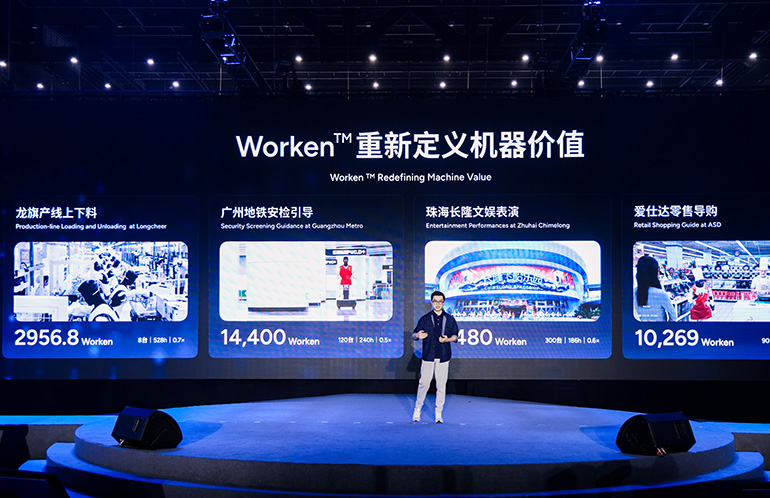
AGIBOT is proposing a metric called Worken to measure deployed fleets by actual labor rather than shipment milestones: active units multiplied by autonomous hours, multiplied by output efficiency against a human baseline. It is a useful shift in framing for the humanoid sector. After reporting 20,000 manufactured units and leading global shipment tables earlier this year, the company is acknowledging that hardware sitting in inventory or running on continuous teleoperation does not create enterprise value.
The second factor in that formula, autonomous working hours, is where most deployments run into trouble. Total powered-on time often masks frequent operator interventions, resetting routines and thermal timeouts. Hardware choices like the liquid-cooled joints AGIBOT show how physical durability directly relates to more uptime. A model can produce sound trajectory plans, but if actuators overheat during continuous operation, the value proposition collapses.
Benchmarking output against human baseline standards will be the contentious part of the equation. Human workers adapt to unexpected bin orientations and variable packaging without reconfiguration, whereas an efficiency ratio for embodied models depends heavily on narrow task definitions. Still, forcing the conversation toward autonomous shift completion is the right pressure for the industry. If robotics companies want enterprise procurement teams to treat physical AI as capital equipment rather than experimental pilots, proving sustained, hands-off output is the only metric that matters.