AI data pipelines hide their human supply chain
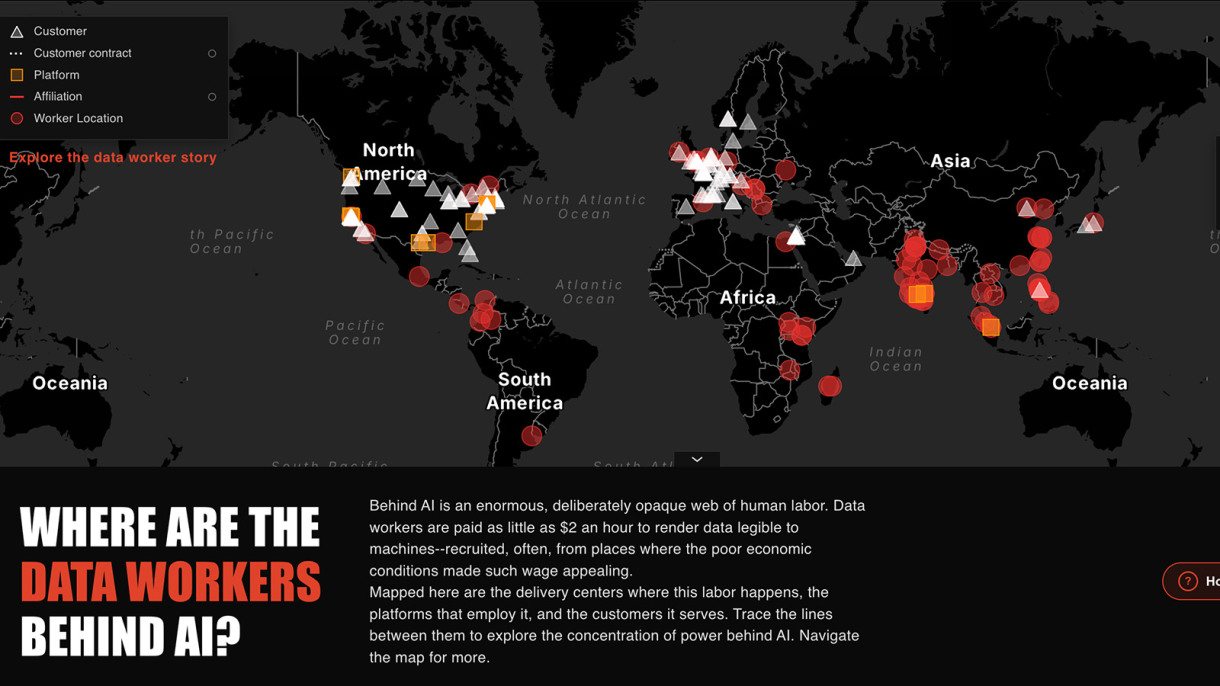
Cunyan Ma at Brown University built an interactive map tracing the network of brokerages and subcontractors connecting major technology companies to data workers around the world. The project aggregates existing databases, investigative reporting, and direct records to show how tasks like safety filtering, medical annotation, and reinforcement learning feedback flow to low-wage workers across the Global South. While machine learning development is usually discussed in terms of compute clusters and token budgets, modern models still depend on people manually scoring model replies and screening harmful material to train safety filters.
Enterprise software teams spend substantial effort auditing open-source dependencies and verifying code security, yet the human data pipeline remains almost entirely opaque. Frontier labs rarely disclose which intermediaries handle their evaluation and alignment workflows, let alone the quality controls enforced downstream. That opacity introduces operational friction. Layers of subcontracting obscure data provenance, introduce inconsistent labeling standards, and make it difficult for buyers to verify the integrity of the data that shaped their models.
Tracing data lineage cannot end at recording the web domains in a pretraining corpus. Verifying where reinforcement feedback comes from, who labeled it, and under what conditions is an auditability problem that enterprise procurement will eventually force the industry to address.