FCC restrictions push robot models to local silicon
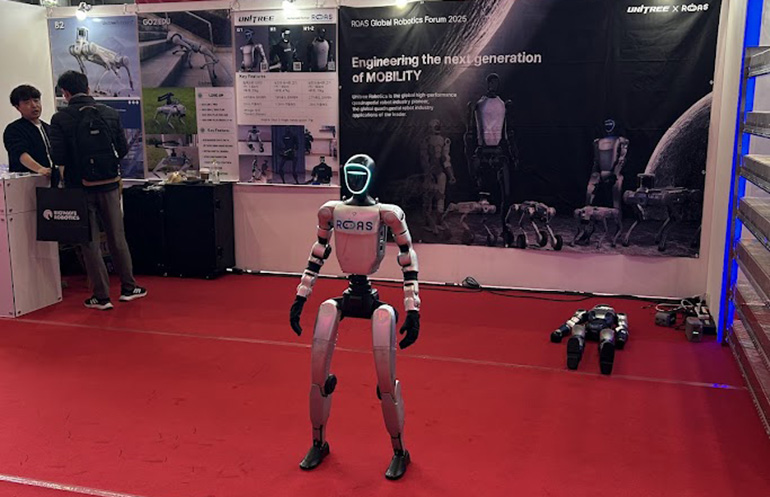
The Federal Communications Commission added foreign-produced advanced robotics to its restricted technology list, cutting off equipment authorization for imports deemed national security risks. As Jenny Shern points out in The Robot Report, treating autonomous mobile platforms as connected surveillance risks shifts the engineering problem straight to the compute architecture. Sourcing domestic hardware is only the first layer. If a quadruped or humanoid streams detailed spatial maps and live operational telemetry to an external cloud for processing, how is that data secured? A maligned actor could end up with a full 3D map and operational schedule for critical infrastructure.
Cloud-tethered architectures have been a convenient shortcut for physical AI. Offloading high-level reasoning, instruction parsing, and spatial understanding to remote foundation models spared developers from the strict thermal and memory limits of embedded boards. That compromise is expiring. When sending environment telemetry over external networks triggers regulatory scrutiny or security vetoes, task planning and scene interpretation have to happen inside the building, either on-premise or directly on the machine.
This dynamic makes small, specialized models running on local silicon far more practical than general-purpose APIs. A robot moving pallets does not need to answer trivia questions. It needs deterministic spatial logic, immediate task adaptation, and clean integration with safety controllers. Forcing inference onto the edge adds integration friction, requiring teams to validate hardware pipelines and quantize models tightly. But technology sovereignty in robotics was always going to require local execution, and regulation is simply accelerating the deadline.