Atlas on wheels makes the case for hybrid locomotion
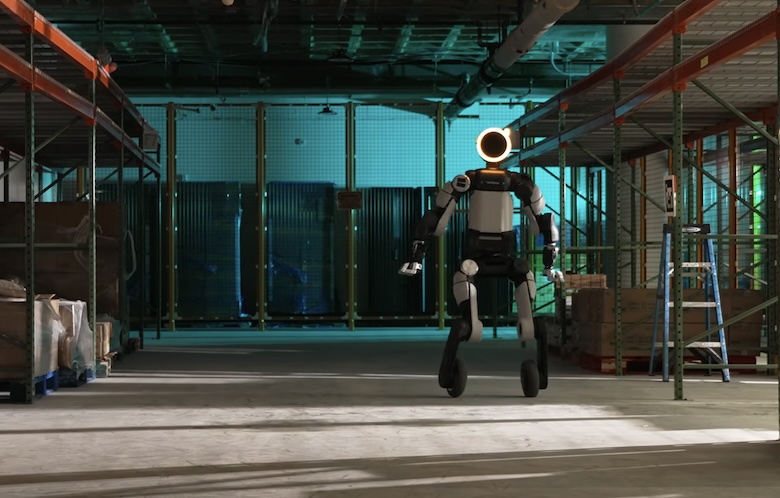
Mounting off-the-shelf scooter wheels to a bipedal humanoid sounds like a shop-floor prank, but the controls problem behind it is serious. In an experiment reported by The Robot Report, Boston Dynamics controls engineer Andy Wu swapped the feet on Atlas for driven rims using a single custom adapter per ankle. Instead of re-architecting the powertrain, the software simply treated each wheel as an ankle joint configured to rotate continuously, training the entire locomotion policy in simulation before testing it on physical hardware.
The technical tension here is how to bridge classical motor control and learned behavior. Pure model-based control struggles with unpredictable friction, sudden contact changes, and unmodeled disturbances when rolling at speed, while pure reinforcement learning can be brittle and opaque. By running a whole-body reinforcement learning policy on top of classical motor controllers, Atlas stabilizes dynamic, skate-like maneuvers and recovers from unexpected contact while keeping deterministic baseline safety intact.
Humanoid robotics often gets caught in an ideological trap between purist bipedal walking and dedicated wheeled bases. In commercial facilities with smooth concrete interrupted by door thresholds and debris, pure walking wastes battery while fixed wheels get stuck. A platform that skates across open floor and articulates over obstacles combines the energy efficiency of wheels with the obstacle clearance of legs. Testing how that policy handles unexpected actuator failure will show whether this hybrid approach is resilient enough for production.